The “Tree of Life”: Cedar’s Long Human Story
Long before cedar shakes topped homes in the Midwest, western red cedar was at the center of entire cultures. For the Indigenous peoples of the Pacific Northwest coast, it was so essential that it’s often described as the “tree of life.” Knowing that history adds a whole new layer of meaning to the wood we see on roofs today.
A Material for Everything
Nations along the Northwest Coast, including the Haida, Tlingit, Kwakwaka’wakw, Nuu-chah-nulth and Coast Salish peoples, developed remarkably sophisticated ways of using cedar. Nearly every part of the tree had a purpose.
The wood was used to build large plank houses that sheltered extended families. Massive logs were carved into ocean-going canoes that could carry many people over long distances along the coast. Monumental carved poles recorded family histories, honored ancestors and marked important events. Smaller pieces became tools, masks, bowls and storage chests.
Even the bark was valuable. In spring, when the sap was running, long strips of bark could be peeled from living trees. The soft inner layer was processed into fibers and woven into clothing, capes, hats, mats, baskets and rope. Cedar bark garments were valued for shedding rain, an important quality in one of the wettest regions of North America.
Trees That Still Carry the Marks
Bark was usually harvested in a way that kept the tree alive. A strip was removed from only part of the trunk, so the tree could keep growing, and over time its living wood grew around the scar. Today, these “culturally modified trees” can still be found in forests across British Columbia and the Pacific Northwest. Some bear marks made centuries ago. Archaeologists study them as living records of human history, and many are protected.
Some cultures even split planks from standing trees, using wedges to separate long boards from the trunk without cutting the tree down. That technique depended on the same quality that makes cedar ideal for roofing: straight, even grain that splits cleanly along its length.
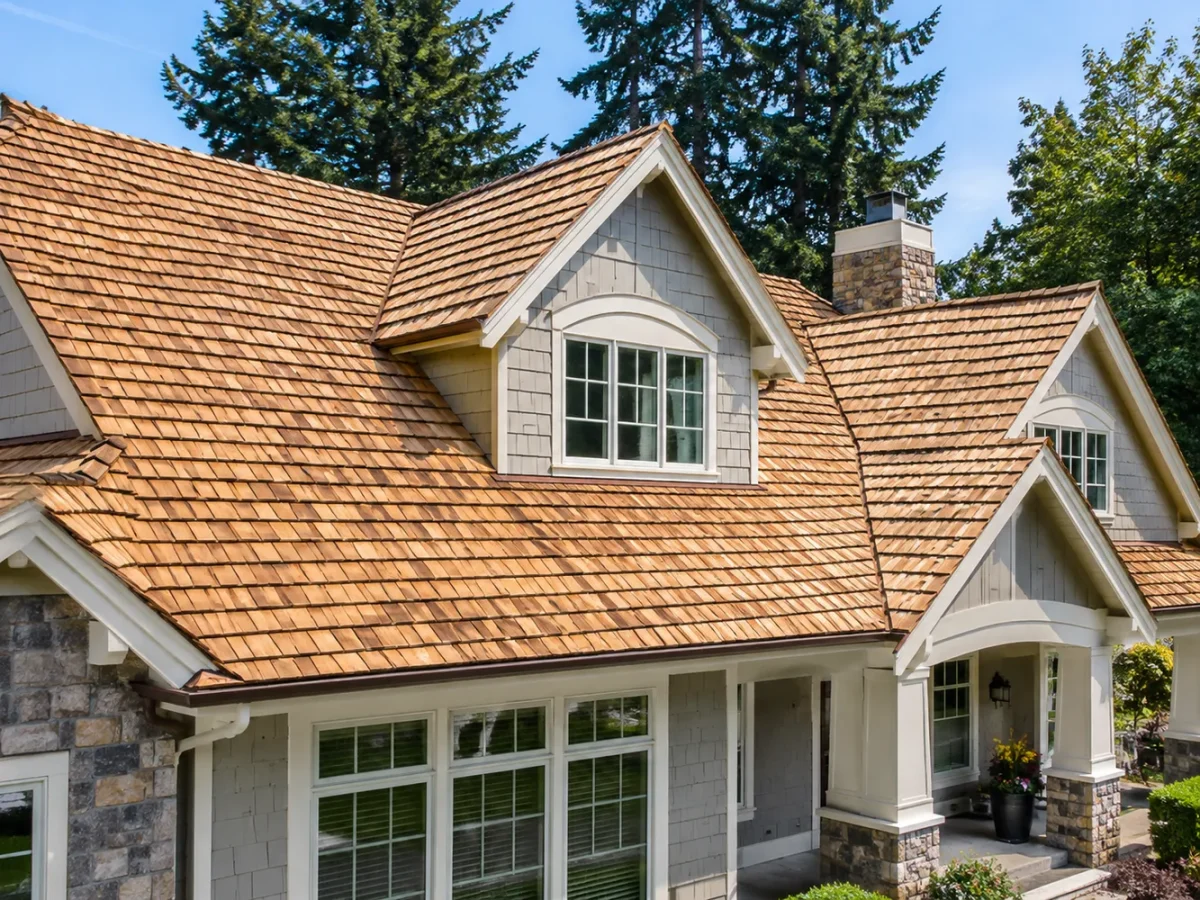
A homeowner searching for cedar roofing near me Oak Park is benefiting from the very properties that made this tree so precious to coastal communities thousands of years ago.
The Box That Bends
One of the most ingenious cedar crafts is the bentwood box. A single cedar plank was carefully grooved at three points across its width and softened with steam until it could bend into corners without breaking. The fourth corner was joined with pegs or sewn together, and a bottom was fitted to complete the box. Done well, these boxes were tight enough to hold water. Some were even used for cooking: heated stones were dropped into the liquid inside.
The idea of steaming cedar to bend it reappeared in a very different setting much later. In the early twentieth century, roofers steamed cedar shingles so they could curve around rounded eaves and imitate the look of thatched cottage roofs.
An Official Symbol
Cedar’s cultural importance is still recognized today. In 1988, British Columbia named western red cedar its official tree, honoring both its role in the province’s history and its significance to Indigenous communities. Contemporary artists continue to carve cedar poles, canoes and masks, keeping traditional techniques alive.
What Cedar Offers the Senses
Part of cedar’s appeal has always been how it feels to live with. The natural oils that help protect the wood also give it a distinctive aroma, especially when it’s new or warmed by the sun. Its light cellular structure is full of tiny air pockets, which makes it a natural insulator that slows heat moving into or out of a home.
A wood roof can also change the sound of a storm. Textured cedar surfaces tend to soften the drumming of rain compared with harder roofing materials, so the sound inside is gentler. For anyone comparing materials through a search like cedar roofing near me Hinsdale, these sensory qualities rarely appear on a spec sheet. Still, they’re part of what living under a wood roof is like.
A Connection Across Time and Distance
There’s something remarkable about a material so deeply tied to life on the Pacific coast now protecting homes on the prairie, roughly two thousand miles away. A cedar shake on a suburban roof is part of a story that includes ancient forests, master carvers, canoe builders and weavers.
So whether you’re simply curious about the history of building materials or searching for cedar roofing near me Naperville, remember that cedar has been sheltering people for thousands of years. Few materials can claim a longer or richer relationship with the people who use them.